


Subaru All-Wheel Drive: The Ultimate Safety Advantage
Subaru All-Wheel Drive Safety: Why It Matters
Subaru Symmetrical All-Wheel Drive delivers constant power to all four wheels, providing superior traction on wet roads and during sudden South Florida downpours. The system’s balanced design lowers the vehicle’s center of gravity for enhanced stability. This engineering reduces wheel slippage and improves control, making every drive safer for families.
Key Takeaways
- Symmetrical All-Wheel Drive continuously powers all four wheels, preventing hydroplaning during sudden South Florida downpours.
- The balanced, centerline-aligned design lowers the center of gravity, enhancing stability and reducing wheel slippage.
- Torque redistributes instantly to gripping wheels, preserving steering authority and preventing fishtailing on slick highways.
- Proactive power delivery eliminates the reactive lag found in competitor systems, keeping drivers in control before traction breaks.
Why does South Florida need all-wheel drive?
South Florida drivers face year‑round rain and variable road conditions that demand more than a standard drivetrain. Subaru All-Wheel Drive Safety begins with a system engineered to maintain control when pavement turns slick, a daily reality during sudden tropical downpours. Without it, hydroplaning risk spikes and stopping distances stretch unpredictably. Subaru of Pembroke Pines matches these local driving needs with Symmetrical All-Wheel Drive, a technology that sends power to all four wheels continuously rather than waiting for slip to occur.
How does all-wheel drive improve control during Florida rainstorms?
All-wheel drive delivers greater control and stability in conditions that cause slippage or loss of traction. When a vehicle hits standing water, the system redistributes torque instantly to the wheels with grip. The driver keeps steering authority instead of fighting a skid. That split‑second response prevents the fishtailing that sends commuters into adjacent lanes on I‑95 or the Palmetto Expressway.
What makes Subaru’s system different from reactive all-wheel drive?
Most competitors start with a front‑wheel‑drive platform and add components to push power rearward only after sensors detect trouble. That reactive lag leaves a gap where traction is already compromised. Subaru’s Symmetrical All-Wheel Drive operates proactively, maintaining balanced power distribution before conditions deteriorate. The layout places major drivetrain components along the vehicle’s centerline, creating symmetry that reduces driveline weight and improves side‑to‑side balance. For South Florida shoppers who never see snow but routinely navigate flooded intersections and oil‑slicked asphalt after the first rain in weeks, that constant readiness matters. A system that waits to react costs drivers the half‑second of control they need most.
What makes Symmetrical AWD different from standard AWD?
Symmetrical All-Wheel Drive operates proactively, not reactively. The system stays always engaged and always prepared for changing road conditions, a fundamental departure from how most competitors design their drivetrains.
Most other automakers start with a front-wheel-drive platform and add components to send power to the rear wheels when needed. That reactive approach introduces a delay before power reaches the wheels that need it most. Traction loss begins, sensors detect the slip, and only then does the system respond. In South Florida’s sudden downpours, that split-second lag matters. Hydroplaning risk spikes during the wait.
Subaru takes the opposite path. The Subaru All-Wheel Drive Safety advantage comes from a system that continuously sends power to all four wheels. Sensors monitor traction constantly and adjust power distribution without any driver input. No delay. No waiting for slip to trigger a response. The drivetrain setup appears on nearly every Subaru vehicle, making it a standard feature rather than an expensive option.
How does a proactive AWD system improve daily driving?
A proactive system eliminates the hesitation built into reactive designs. Power flows to all four wheels before traction breaks, not after. Drivers experience consistent stability through standing water, loose gravel, and uneven pavement. The vehicle feels planted and predictable.
Why does the drivetrain layout matter for reliability?
Subaru’s symmetrical layout aligns the drivetrain components along the vehicle’s centerline. This balanced design reduces stress on individual parts compared to systems that bolt rear-drive hardware onto a front-drive platform. Fewer right-angle power transfers mean less driveline wear over time. Long-term durability improves as a direct result.
| Feature | Standard AWD (Reactive) | Subaru Symmetrical AWD (Proactive) |
|---|---|---|
| Power delivery | Sends power rearward after slip detected | Continuously powers all four wheels |
| Response time | Delayed engagement | Instantaneous, always active |
| Drivetrain layout | Front-wheel-drive platform with added components | Symmetrical, centerline-aligned design |
| Standard availability | Often optional or trim-dependent | Standard on nearly every Subaru model |
South Florida drivers rarely see snow. They do see torrential rain, slick highway expansion joints, and sudden standing water. A system that waits to react leaves a gap in protection. Symmetrical AWD closes that gap by staying engaged from the moment the engine starts.
How does Symmetrical AWD improve traction in rain?
Subaru Symmetrical All-Wheel Drive delivers continuous power to all four wheels while constantly monitoring traction. The system automatically redirects torque the instant sensors detect wheel slip on wet pavement. South Florida drivers who skip this technology risk hydroplaning events that standard front-wheel-drive systems cannot correct fast enough.
Subaru All-Wheel Drive Safety begins with a drivetrain designed from the ground up for all-wheel operation. Unlike reactive systems that start with two-wheel drive and engage the other axle only after slip occurs, Symmetrical AWD sends power to every wheel at all times. This proactive design matters most during sudden downpours on I-95 or standing water on Pines Boulevard. The system adjusts power distribution instantaneously, with no driver input required.
What happens when a wheel loses grip on wet roads?
Sensors detect the loss of traction immediately. Torque shifts to the wheels with better grip before the driver even notices the slip. The correction happens in milliseconds. A vehicle without this capability continues sending power to the spinning wheel, deepening the loss of control.
Why does constant power to all four wheels matter in rain?
All-wheel drive determines how a vehicle's wheels receive power during harsh weather and challenging road conditions. Symmetrical AWD maintains stability by keeping all four wheels engaged before, during, and after a traction loss. The system does not wait for a problem to develop. It prevents the initial slip from becoming a skid, which is the difference between a controlled lane change and a spinout on a flooded highway.
The technology proves its worth across South Florida's variable conditions. Morning commuters face sudden cloudbursts. Afternoon thunderstorms leave inches of standing water at intersections. Symmetrical AWD gives drivers greater control and stability through every scenario, transforming a nerve-wracking drive into a confident one.
What safety technology pairs with Subaru All-Wheel Drive Safety?
Subaru All-Wheel Drive Safety gains its full advantage when paired with active driver-assist systems. EyeSight Driver Assist Technology serves as the primary safety partner, using dual cameras to monitor traffic and intervene before a collision occurs. Without this pairing, drivers lose the split-second reaction time that prevents common South Florida accidents on rain-slicked I-95 or during sudden rush-hour stops.
The Subaru Ascent demonstrates how these technologies work together. Its standard Symmetrical All-Wheel Drive continuously distributes power to all four wheels. EyeSight adds adaptive cruise control, pre-collision braking, and lane departure warnings. The combination transforms a large three-row SUV into a responsive, protective vehicle. Families in Pembroke Pines and Weston gain confidence during afternoon thunderstorms when standing water hides pavement markings.
How does EyeSight protect passengers in a Subaru SUV?
EyeSight acts as a second set of eyes that never blinks. The system scans for vehicles, pedestrians, and obstacles. It applies full braking force when a frontal collision is imminent. The Subaru Outback includes this technology as standard equipment, providing extra protection for every passenger. Available DriverFocus technology adds another layer by monitoring driver alertness and issuing warnings if distraction is detected.
What other features support Subaru All-Wheel Drive Safety?
Every Subaru SUV includes an advanced infotainment system with Apple CarPlay and Android Auto integration. This keeps drivers connected without handling their phones. Voice commands and large touchscreen controls reduce the temptation to glance away from the road. The system delivers turn-by-turn directions audibly, so drivers maintain focus on changing conditions ahead.
Subaru of Pembroke Pines equips its entire new-vehicle inventory with these integrated protections. The Ascent, Outback, and every other model combine Symmetrical All-Wheel Drive with EyeSight monitoring. Shoppers from Miami to Fort Lauderdale experience a vehicle that actively prevents accidents rather than simply surviving them.
How does X-MODE extend AWD capability off-road?
X-MODE transforms Subaru’s Symmetrical All-Wheel Drive into a dedicated low-speed traction system. The technology optimizes engine output, transmission ratios, and brake intervention for slippery surfaces and steep grades. Without this specialized programming, drivers lose the precise wheel control that prevents spin-outs on loose gravel, mud, or sand. South Florida’s sudden downpours turn unpaved roads and grassy event parking into slick hazards. X-MODE eliminates the guesswork.
The system engages with a single switch. Once activated, X-MODE increases front-to-rear coupling force and adjusts the throttle response. Wheel slip detection becomes more aggressive. The system brakes a spinning wheel instantly and redirects torque to the wheels with grip. This happens without any pedal modulation from the driver. Hill Descent Control also activates automatically, holding a steady crawl speed on steep descents so the driver focuses entirely on steering.
What Subaru models include X-MODE?
Several current Subaru vehicles offer X-MODE as standard or available equipment. The Subaru Outback lists X-MODE among its available performance features, alongside Traction Control System and Active Torque Vectoring. The Subaru Ascent pairs X-MODE with 8.7 inches of ground clearance, giving family adventurers the hardware to clear ruts and rocks that would hang up lower crossovers. Other models in the lineup integrate the system to match their specific ground clearance and drivetrain tuning.
How does X-MODE differ from standard AWD?
X-MODE anticipates wheel slip by pre-loading the all-wheel-drive clutch pack and remapping the throttle for finer control at crawling speeds. The system pre-loads the all-wheel-drive clutch pack and remaps the throttle for finer control at crawling speeds. Drivers gain confidence on terrain where a momentary loss of traction could mean getting stuck. The result is added peace of mind when pavement ends and the trail begins.
Which Subaru models come with standard AWD?
Nearly every Subaru vehicle leaves the factory with Subaru All-Wheel Drive Safety built in as standard equipment. The only exception in the current lineup is the BRZ sports coupe. South Florida drivers who skip the snow but face daily downpours and slick highway ramps get the same Symmetrical All-Wheel Drive system that handles northern winters.
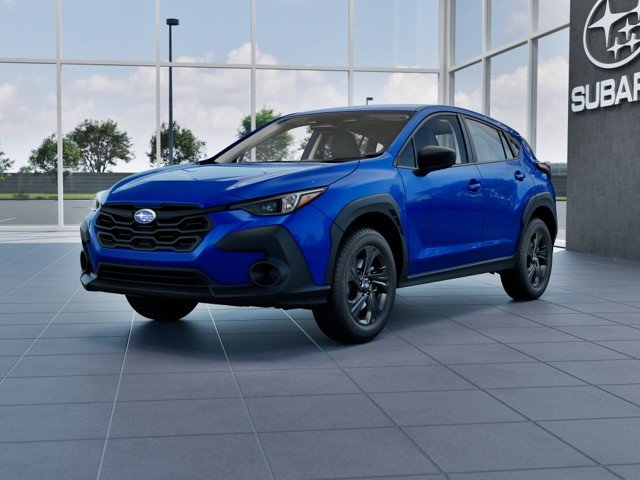
The Subaru SUV lineup spans from the compact Crosstrek to the all-electric Solterra. Each model features the standard Symmetrical All-Wheel Drive. The Subaru Crosstrek pairs that AWD with a 182-horsepower SUBARU BOXER engine. The result is responsive acceleration and stability across wet intersections and gravel-strewn construction zones.
What is the largest Subaru with standard AWD?
The Subaru Ascent holds the title of the biggest Subaru ever made. Three rows of flexible seating accommodate up to eight passengers. Standard Symmetrical All-Wheel Drive and 8.7 inches of ground clearance make this family hauler ready for flooded streets and uneven terrain. No upgrade package is required to get the full-time traction system.
Does the Subaru Solterra have all-wheel drive?
The all-electric Solterra includes standard all-wheel drive. Subaru engineered the EV platform with a dual-motor electronic all-wheel-drive system that delivers balanced power to all four wheels without traditional mechanical linkages. Instant electric torque reaches all four wheels without the delay of a part-time system engaging after slip begins.
Standard AWD Subaru models at a glance:
| Model | Seating | Key AWD Benefit |
|---|---|---|
| Crosstrek | 5 | Compact agility with 182-hp BOXER engine |
| Forester | 5 | High ground clearance for deep water |
| Outback | 5 | Wagon versatility with full-time traction |
| Ascent | Up to 8 | Three-row capability with 8.7-inch clearance |
| Solterra | 5 | Electric torque to all four wheels |
Subaru of Pembroke Pines stocks the complete AWD-equipped lineup. Shoppers from Miami to Weston find the same drivetrain confidence on every trim level. The company does not gate its core safety technology behind expensive option packages. That consistency matters when a sudden storm turns I-95 into a hydroplaning risk.
How does AWD handle slick highways and flooding?
Subaru All-Wheel Drive Safety becomes a critical asset on waterlogged pavement. AWD sends power to all four wheels, reducing the chance of hydroplaning that leaves two-wheel-drive vehicles floating helplessly across flooded asphalt. Losing traction on a crowded South Florida interstate is a risk drivers in Miami, Fort Lauderdale, and Kendall simply cannot afford.
Standard drivetrains react to slip after it happens. The AWD system takes a proactive approach instead. All-wheel drive vehicles utilize front, rear, and center differentials to deliver constant, varying amounts of power directly to each wheel. When a tire begins to lose grip on standing water, the differential instantly redirects torque to the wheels with better contact. A driver feels the difference as a planted, confident stance rather than a sudden lurch.
How does AWD improve stability during sudden downpours?
South Florida's tropical weather shifts from sunshine to torrential rain in minutes. The system continuously monitors rotation at each corner. Balanced power distribution keeps the vehicle tracking straight through deep puddles that tug at the steering wheel. This steady delivery prevents the fishtailing that frightens drivers during highway commutes.
Can AWD help when roads flood unexpectedly?
Pembroke Pines and Hollywood roads collect water fast. With ever-changing weather patterns, including heavy rain, occasional flooding, and slippery road conditions, maintaining traction is crucial. AWD creates forward momentum using all four contact patches. When standing water threatens to stall a vehicle, the system pushes through rather than spinning helplessly at a single axle. The center differential balances front and rear output, giving each tire a chance to find dry pavement and pull the car forward. Drivers across Broward, Miami-Dade, and Palm Beach counties rely on this predictable response every rainy season.
Where can South Florida drivers test Symmetrical AWD?
Subaru of Pembroke Pines maintains a full inventory of new Subaru models equipped with Subaru All-Wheel Drive Safety technology. The dealership's showroom at 16100 Pines Boulevard in Pembroke Pines, FL, provides direct access to the complete lineup for test drives. No appointment is required to experience the system firsthand.
What Subaru models are available for a Symmetrical AWD test drive?
The dealership stocks every new Subaru model. Shoppers can compare sedans, crossovers, and SUVs back-to-back. A robust selection of pre-owned and Subaru Certified Pre-Owned vehicles also sits on the lot. This variety lets drivers evaluate Symmetrical AWD across different vehicle sizes and use cases.
Can drivers schedule a test drive online before visiting?
Yes. The dealership's Express Store enables customers to start a purchase digitally. Financing applications, trade-in valuations, and service appointments are all available through the same online platform. A streamlined digital experience reduces time spent at the showroom. Drivers arrive with paperwork already in progress and keys ready.
The process is straightforward. A customer selects a model online, submits basic information, and receives confirmation. The Express Store handles the preliminary steps. This approach respects a buyer's time while preserving the essential hands-on evaluation of Symmetrical AWD performance on South Florida roads.
Subaru of Pembroke Pines serves Broward, Miami-Dade, and Palm Beach counties. The central Pembroke Pines location places the full Subaru lineup within easy reach of drivers from Miami, Fort Lauderdale, and Weston. Testing Symmetrical AWD requires only a visit to 16100 Pines Boulevard.
FAQ
Why does South Florida need all-wheel drive?
South Florida faces year-round rain and variable road conditions. Subaru Symmetrical All-Wheel Drive sends power to all four wheels continuously, preventing hydroplaning and reducing unpredictable stopping distances during sudden tropical downpours.
How does the system maintain control when a vehicle hits standing water?
The system redistributes torque instantly to wheels with grip. This preserves steering authority and prevents fishtailing on slick highways like I-95 or the Palmetto Expressway.
What makes Subaru’s system different from reactive all-wheel drive?
Subaru’s Symmetrical All-Wheel Drive operates proactively with balanced power distribution, while competitors react only after sensors detect slip. The centerline-aligned design lowers the center of gravity, enhancing stability and eliminating reactive lag before traction breaks.
Conclusion
South Florida drivers who test Symmetrical All-Wheel Drive at the showroom feel the difference immediately, a planted stance through standing water and steady tracking on rain-slicked highways. That firsthand experience confirms why full-time traction belongs on every daily commute, not just off-road adventures. The next step is simple: schedule a test drive and feel the system respond before the next storm hits.