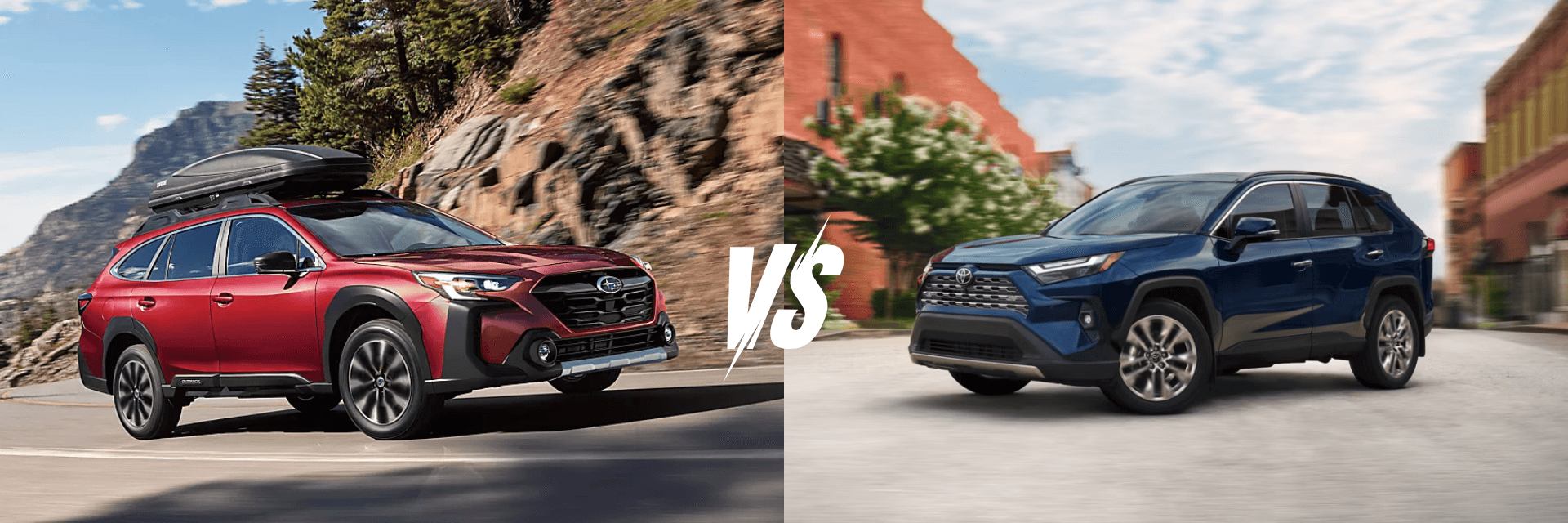
When shopping for a versatile mid-size SUV that delivers both everyday practicality and genuine adventure capability, two standout contenders consistently top buyer consideration lists: the 2025 Subaru Outback and the 2025 Toyota RAV4. Both vehicles promise reliability, all-weather confidence, and modern features, but they take notably different approaches to achieving these goals.
The Outback emphasizes rugged capability and spacious comfort with its wagon-based design, standard all-wheel drive, and impressive cargo capacity – making it a natural choice for families and outdoor enthusiasts. The RAV4, meanwhile, focuses on proven reliability and fuel efficiency while offering available hybrid powertrains and Toyota's legendary durability. Understanding these fundamental differences will help determine which vehicle better matches your lifestyle and driving priorities.
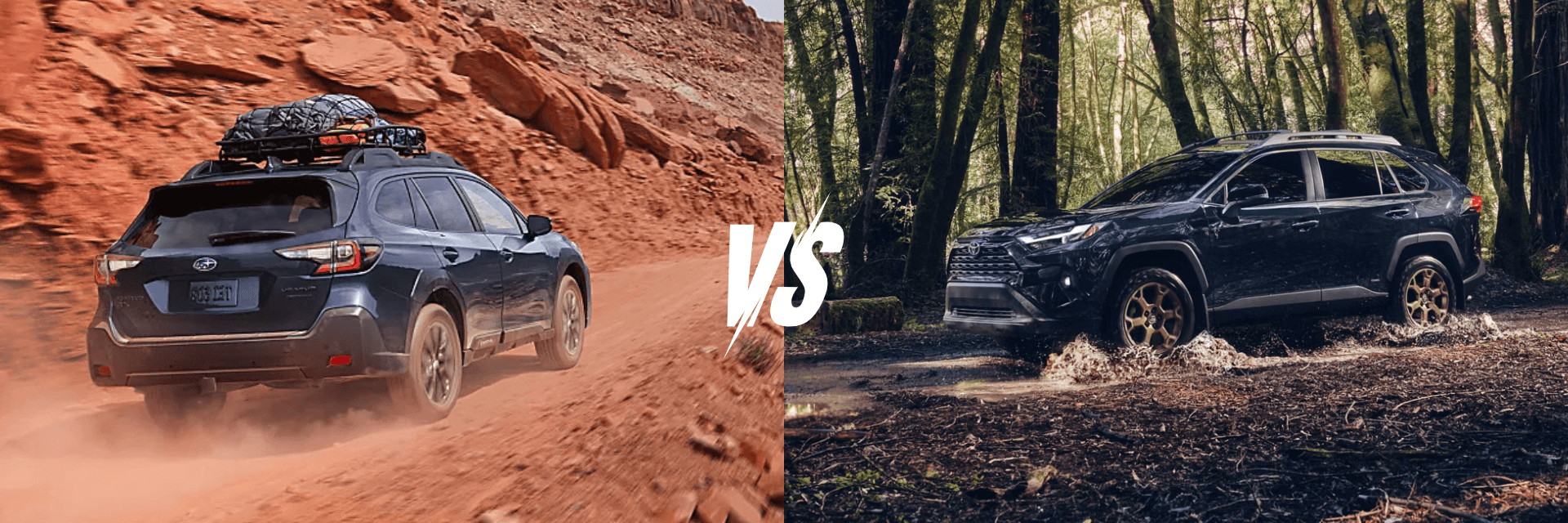
The performance characteristics of these vehicles reveal their distinct philosophies, with the Outback prioritizing versatility and capability while the RAV4 emphasizes efficiency and reliability.
The RAV4 offers more horsepower in its base engine, while the Outback counters with superior ground clearance and standard all-wheel drive across all trims. The Outback's X-MODE system provides more comprehensive off-road capability, making it better suited for serious trail adventures. The RAV4's available TRD Off-Road trim bridges this gap somewhat, but the Outback maintains an advantage for buyers prioritizing genuine off-road capability.
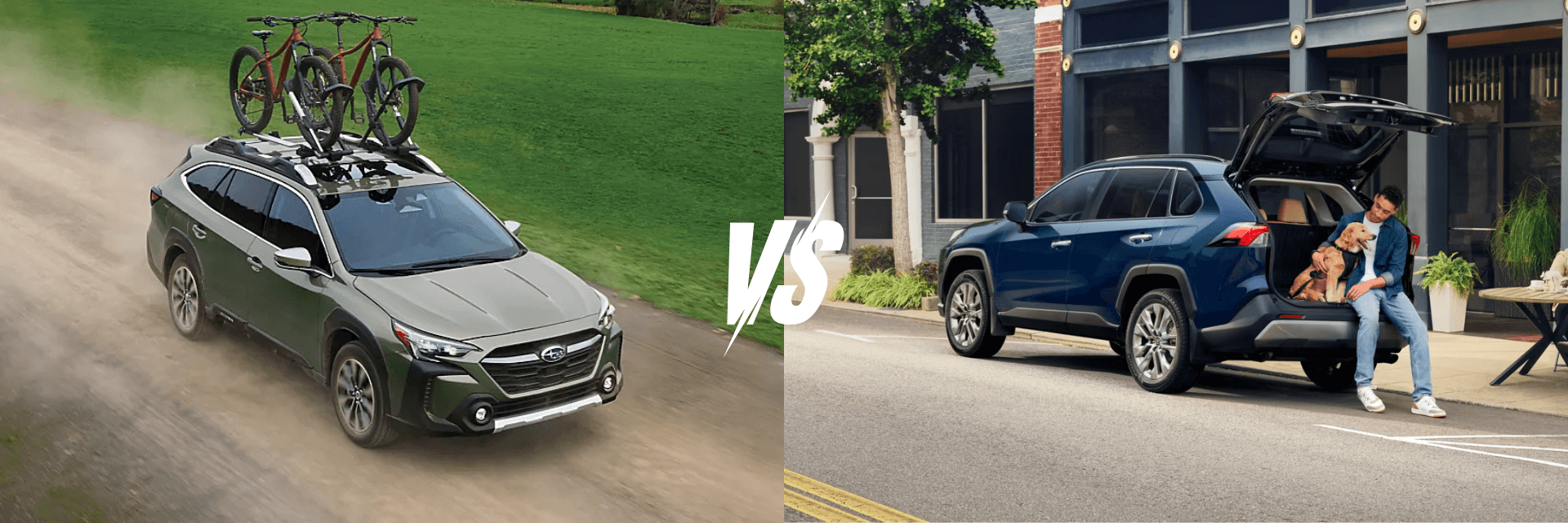
Fuel efficiency remains a crucial consideration for SUV buyers, especially with Toyota's hybrid advantage and Subaru's focus on capability.
The RAV4 Hybrid delivers exceptional efficiency at 40 MPG combined, significantly outpacing the Outback's 28 MPG. However, the Outback's larger fuel tank provides superior driving range – crucial for long trips and rural driving. The RAV4 Prime plug-in hybrid offers the best of both worlds with electric-only driving capability for daily commutes and hybrid efficiency for longer journeys.
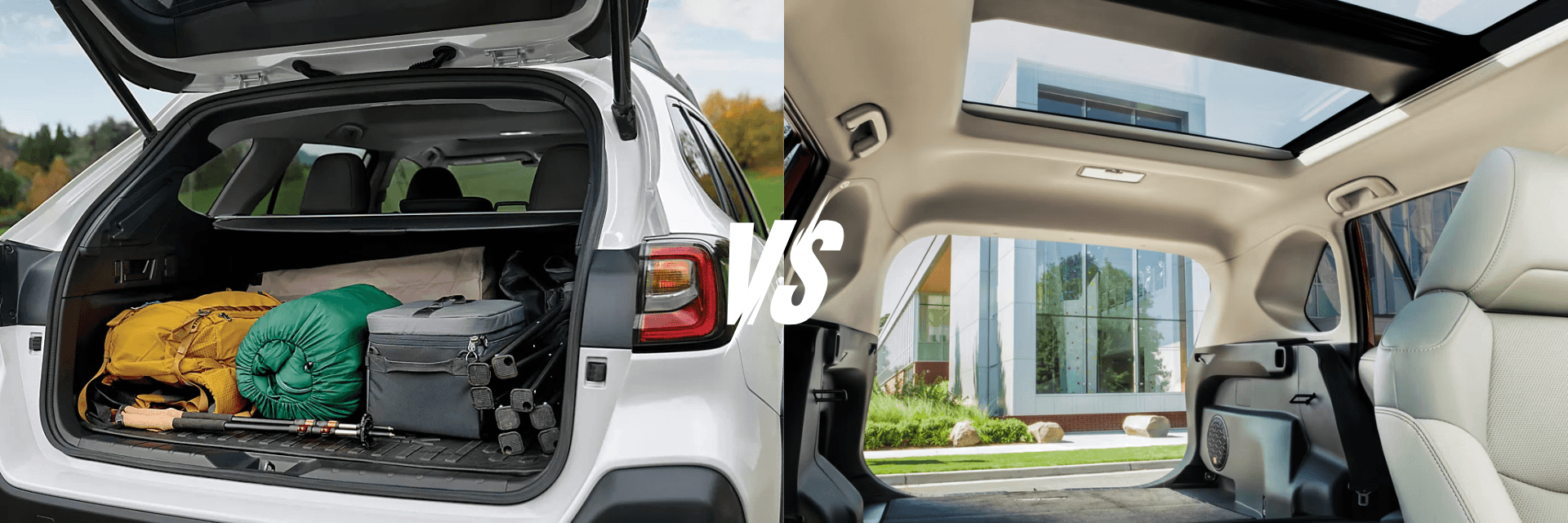
Interior space and comfort directly impact daily usability, making this comparison essential for families and those who frequently carry passengers or cargo.
This comparison reveals interesting trade-offs. The Outback offers more overall passenger volume and significantly more maximum cargo capacity with seats folded, making it superior for large items and camping gear. However, the RAV4 provides more cargo space behind the second row, which benefits daily errands and regular hauling. The Outback's wagon-based design creates a more spacious feel for passengers, especially in the rear seats.
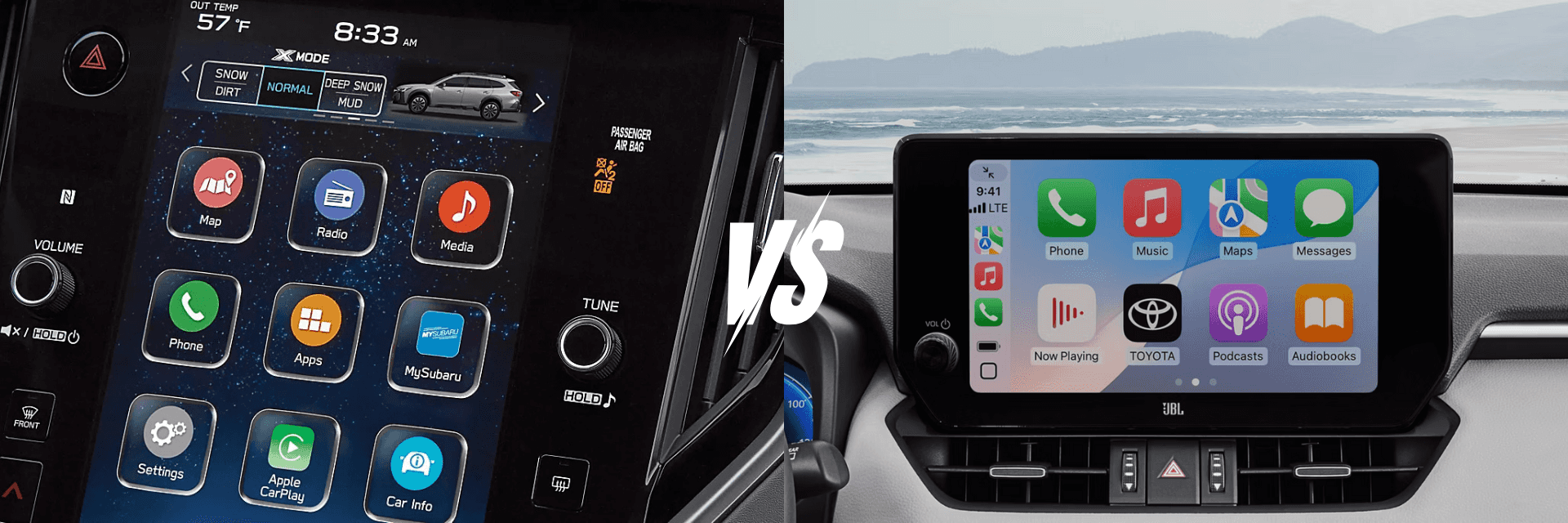
Modern connectivity features have become essential rather than optional, making technology integration a key consideration for today's buyers.
The Outback holds a significant advantage with its available 11.6-inch display – one of the largest in any SUV segment – and comprehensive STARLINK connectivity suite. Both vehicles offer modern smartphone integration and premium audio options, but the Outback's larger screen provides better visibility for navigation and controls. The RAV4 counters with Toyota's reputation for user-friendly interfaces and reliable operation.
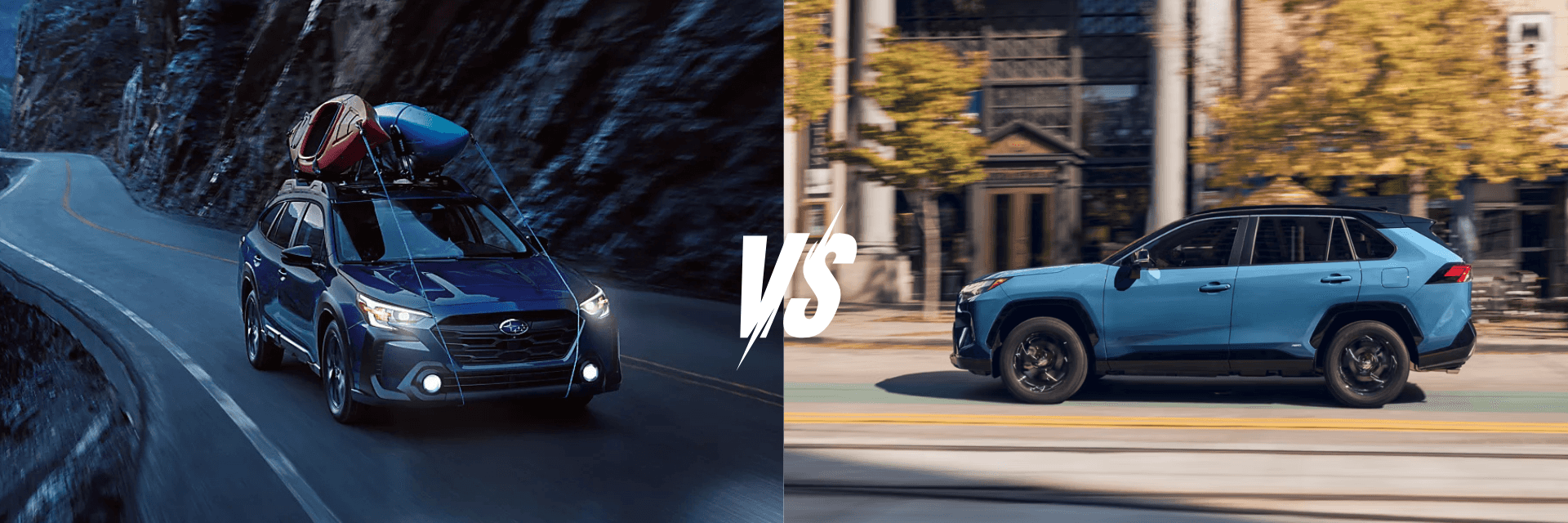
Advanced safety features have transitioned from luxury options to standard expectations, making comprehensive protection systems crucial for family-oriented buyers.
Both vehicles excel in safety, with the RAV4 earning IIHS Top Safety Pick+ recognition on select trims and the Outback receiving Top Safety Pick status. Subaru's EyeSight system benefits from years of refinement and real-world testing, while Toyota Safety Sense 2.0 offers comprehensive protection. The integration of safety systems with the Outback's X-MODE provides additional confidence in challenging driving conditions.
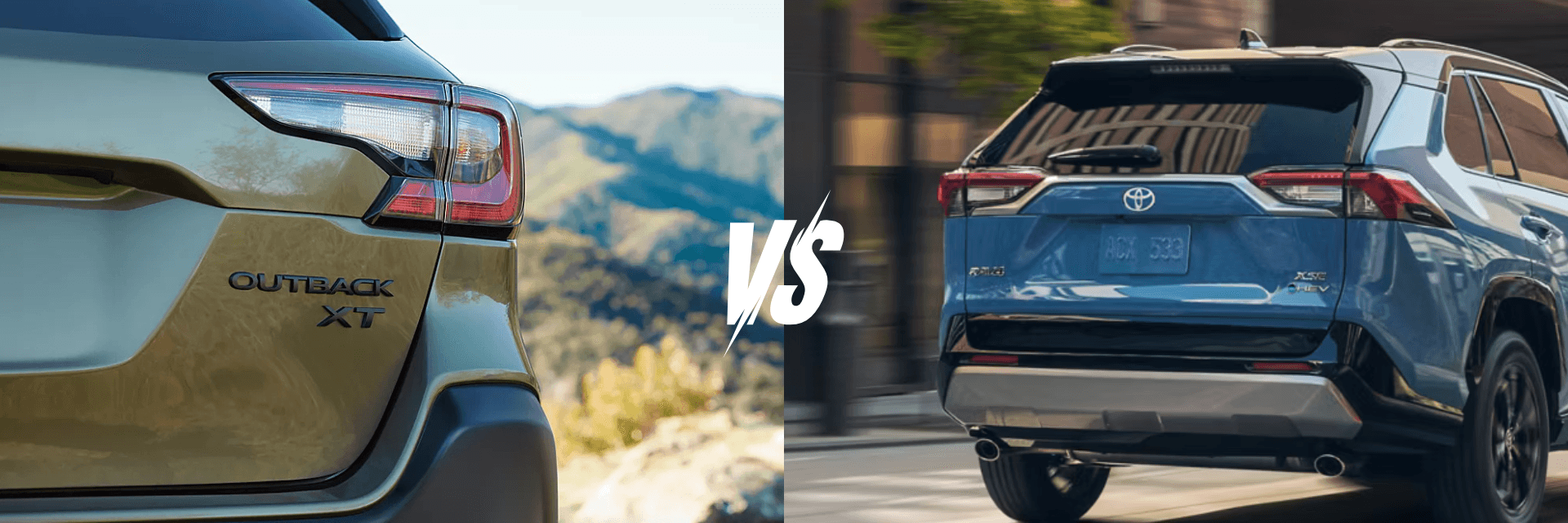
Total cost of ownership extends beyond purchase price to include maintenance, reliability, and resale value over time.
The RAV4 commands slightly higher pricing but justifies this with Toyota's unmatched reliability reputation and exceptional resale values. Both vehicles offer strong long-term value, but the RAV4's hybrid options provide significant fuel savings over time. The Outback's standard all-wheel drive and lower starting price make it attractive for buyers seeking capability without premium pricing.
Total cost of ownership extends beyond purchase price to include maintenance, reliability, and resale value over time.
After examining these vehicles across multiple critical categories, both the 2025 Subaru Outback and 2025 Toyota RAV4 prove themselves as capable SUVs, but they clearly serve different buyer priorities and lifestyles.
The RAV4 excels with Toyota's legendary reliability, excellent fuel economy (especially in hybrid form), and strong resale values. It's ideal for buyers prioritizing proven dependability and long-term cost savings, with the hybrid models offering exceptional efficiency for daily commuting.
However, the 2025 Subaru Outback emerges as the more versatile choice for adventure-oriented buyers due to its standard all-wheel drive, superior ground clearance, genuine off-road capability, and more spacious interior. The peace of mind that comes with standard AWD across all trims, combined with the Outback's proven adventure-ready capability and wagon-like versatility, makes it the smarter investment for active families and outdoor enthusiasts.
Ready to experience the Outback advantage for yourself? Visit Subaru of Pembroke Pines today to schedule a test drive and discover why the 2025 Outback continues to set the standard in the crossover segment. Our knowledgeable team is ready to help you find the perfect Outback trim to match your lifestyle and budget.
New Subaru Vehicles | New Subaru Specials | Subaru Incentives | Collision Center | Subaru Service Center | Finance Center
Miami | Fort Lauderdale | Kendall | Weston | Hollywood